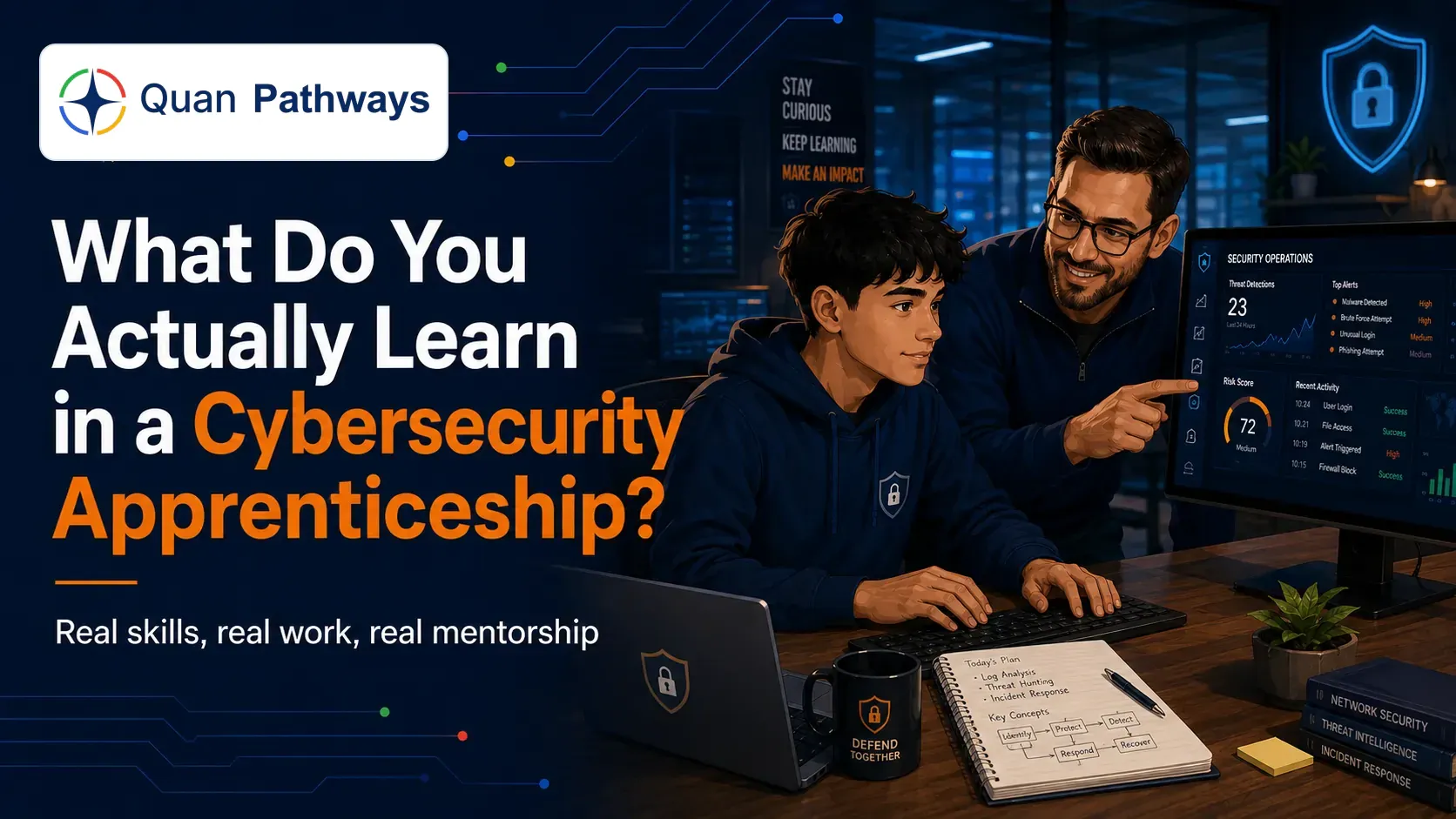
Real skills, real work, real mentorship.
When I entered an apprenticeship at CSAA many years ago, I was not already a programmer looking for a better job title. I was dispatching tow trucks and being given an opportunity to learn COBOL and move into technology.
That distinction matters.
I did not learn by watching a few videos and receiving a certificate that said I was suddenly ready for a technology career. I learned inside a real organization from people who understood the systems, the business, and what could happen when something went wrong. I received instruction, tried things under supervision, made mistakes, improved, and gradually earned more meaningful responsibility.
That experience still shapes how I evaluate apprenticeships today.
When a cybersecurity program says an apprentice will “learn cybersecurity,” I immediately want to know what that actually means. What work will the person perform? Who will teach them? How will the work become more challenging over time? Most importantly, what will the apprentice be able to do at the end that they could not do at the beginning?
Those questions matter because cybersecurity is not one job.
Cybersecurity Is a Collection of Very Different Jobs
The federal government’s NIST cybersecurity framework currently divides the field into 41 distinct Work Roles. That is the government’s formal way of confirming something students need to understand early: a person working in cybersecurity architecture is doing very different work from someone in technical support, incident response, vulnerability management, or defensive monitoring.
Two programs can both advertise a “cybersecurity apprenticeship” and prepare students for entirely different careers.
One apprentice may spend time reviewing alerts and learning when suspicious activity should be escalated. Another may help scan systems for vulnerabilities and document whether those problems were corrected. Someone else may work with user accounts, permissions, compliance records, security policies, or incident reports.
All of those activities can fall under cybersecurity, but they require different skills and lead toward different kinds of jobs.
That is why a program description should never stop at phrases such as “learn cybersecurity fundamentals” or “gain hands-on cyber experience.” Those phrases sound impressive, but they do not tell a family what the student will actually be doing on a Tuesday afternoon.
The government’s O*NET career database describes information security analysts as people who help monitor security measures, identify vulnerabilities, recommend ways to reduce risk, train users, and respond when something goes wrong. In plain English, cybersecurity work is often much less glamorous—and much more important—than the movies make it appear. It involves careful investigation, documentation, communication, repetition, and judgment.
A beginner should not be expected to perform all of that independently. A good apprenticeship teaches those responsibilities in stages.
A Real Apprenticeship Is More Than a Course
The Department of Labor defines a Registered Apprenticeship as paid employment combined with structured workplace learning, mentorship, related instruction, wage progression, and a recognized credential.
That definition gives families a practical test.
If a program is mostly self-paced videos followed by a certificate, it may be training, but it is not the same thing as learning inside a workplace. A true apprenticeship puts the student in an actual job, surrounds that person with experienced employees, and gives them increasingly meaningful work as their ability grows.
The word structured is especially important.
A legitimate program should have a plan for what the apprentice learns first, what comes next, and how the employer decides when the person is ready for more responsibility. A beginner should not be dropped in front of a complicated security dashboard and told to figure it out alone.
Early training may cover how the organization’s technology environment works, how accounts and permissions are managed, how security tickets are documented, and how confidential information must be handled. Apprentices may learn the basics of networks, operating systems, common threats, security policies, and risk.
But the learning should not remain theoretical for long.
The apprentice should eventually begin doing supervised work. That might mean reviewing lower-risk alerts, supporting a user-access review, helping document vulnerabilities, updating a response checklist, or participating in a practice incident.
None of those assignments sounds dramatic. That is exactly the point. Real cybersecurity is not built around dramatic moments. It is built around doing ordinary things carefully enough to prevent extraordinary damage.
Watching Is Not the Same as Doing
Online courses, labs, and certifications can all be useful. They can help a beginner understand vocabulary, build confidence, and practice without putting a real organization at risk.
But there is a major difference between completing a simulated exercise and working with systems that employees, customers, or patients actually depend on.
I learned that difference early in my own career.
Understanding a programming concept was one thing. Making a change to a working business system was another. Suddenly, testing mattered more. Documentation mattered more. Communication mattered more. You learned to ask questions before making assumptions because other people would live with the consequences.
Cybersecurity raises the stakes even further.
An apprentice may be exposed to sensitive logs, internal weaknesses, personal information, or security procedures that cannot be discussed publicly. That means the program has to teach judgment alongside technical ability.
A person can know how to use a security tool and still make a poor employee if they act recklessly, fail to communicate, or do not understand the limits of their authority.
This is where mentorship becomes essential.
A good mentor does more than demonstrate which button to press. The mentor explains why the organization follows a particular process, when a problem should be escalated, what information belongs in an incident note, and how to communicate concern without creating unnecessary panic.
Those lessons are difficult to capture in a video course because they depend on context and experience.
How We Evaluate the Learning at Quan Pathways
Here at Quan Pathways, we look past polished phrases such as “gain cutting-edge cyber skills.” We want to know whether the program can explain the actual work.
The first thing we examine is the occupation or Work Role. “Cybersecurity apprentice” is too broad by itself. The program should help the applicant understand whether the work is closer to security operations, technical support, vulnerability management, identity and access management, compliance, or another specialty.
We also look for a realistic description of the first few months. Beginners deserve to know whether they will be observing meetings, completing foundational training, documenting tickets, working in a lab, or handling supervised assignments.
Then we look for progression.
A credible program should show how the apprentice moves from observation to guided practice and eventually toward more independent work. If the duties never become more meaningful, the student may finish with a credential but very little evidence of actual growth.
Mentorship should also be specific. “Access to industry experts” sounds good in marketing copy, but it is not the same as having an assigned mentor, regular check-ins, and clear feedback.
Instruction matters as well. Families should know whether the classroom component involves college coursework, employer training, certification preparation, online modules, or some combination of those elements.
Finally, the student should understand what credential will be awarded. A Department of Labor or state apprenticeship credential is different from an industry certification, an academic certificate, or a certificate created by the training provider itself. Each can have value, but they should not be presented as though they are interchangeable.
Warning Signs
We become cautious when a program is vague about the employer, the job duties, or the mentor.
We also become cautious when most of the experience consists of videos and quizzes, especially if the participant is being charged substantial tuition for something advertised as an apprenticeship.
Another warning sign is a posting that expects applicants to arrive with nearly all the skills the program claims it will teach. Apprenticeships can have serious standards, but they are supposed to develop talent. If an employer wants several years of cybersecurity experience, multiple advanced certifications, and the ability to work independently from the first day, it may be advertising a regular job under the wrong label.
The strongest programs are honest about the starting point.
They do not pretend the apprentice is already an analyst. They explain how the person will become one.
What an Apprentice Should Be Able to Say at the End
The clearest test comes after the program is completed.
Can the graduate explain what they actually did?
“I learned cybersecurity” is too vague to help an employer understand the experience.
A stronger explanation might be:
I reviewed security alerts under supervision, documented my initial findings, and escalated events according to the team’s response process.
Another apprentice might say:
I supported vulnerability scans, confirmed which systems were affected, and tracked remediation work with system owners.
Someone working with identity controls might explain:
I helped review user access, investigated exceptions, documented approvals, and learned how access controls reduce business risk.
Those statements show real work. They also show context, responsibility, and growth.
CISA advises cybersecurity applicants to explain not merely which tools they used, but what they used them for, what problem they were solving, and what result they helped produce. That advice is practical because employers are not hiring a list of software products. They are hiring someone who can use knowledge responsibly.
Our View
An apprenticeship changed the direction of my life because it connected learning to real responsibility.
It did not make me an expert overnight. It gave me a legitimate beginning, experienced people to learn from, and a path to become useful.
That is what families should expect from a cybersecurity apprenticeship.
The tools will change. The job titles will change. The threats will certainly change. But the basic test remains the same:
Is the apprentice learning to perform real work, with increasing competence, under the guidance of people who know what good work looks like?
At Quan Pathways, we never accept “learn cybersecurity” as a complete explanation.
We look for the work, the mentor, the structure, the progression, and the proof of what the student will be able to do.
Because “learn cybersecurity” is a promise.
A credible apprenticeship shows exactly how that promise will be kept.
Compare how reviewed programs describe their work and next steps in our cybersecurity apprenticeship directory.
Research reviewed August 5, 2026. Program duties and credentials should always be reconfirmed with the employer or program sponsor. Send us a correction.